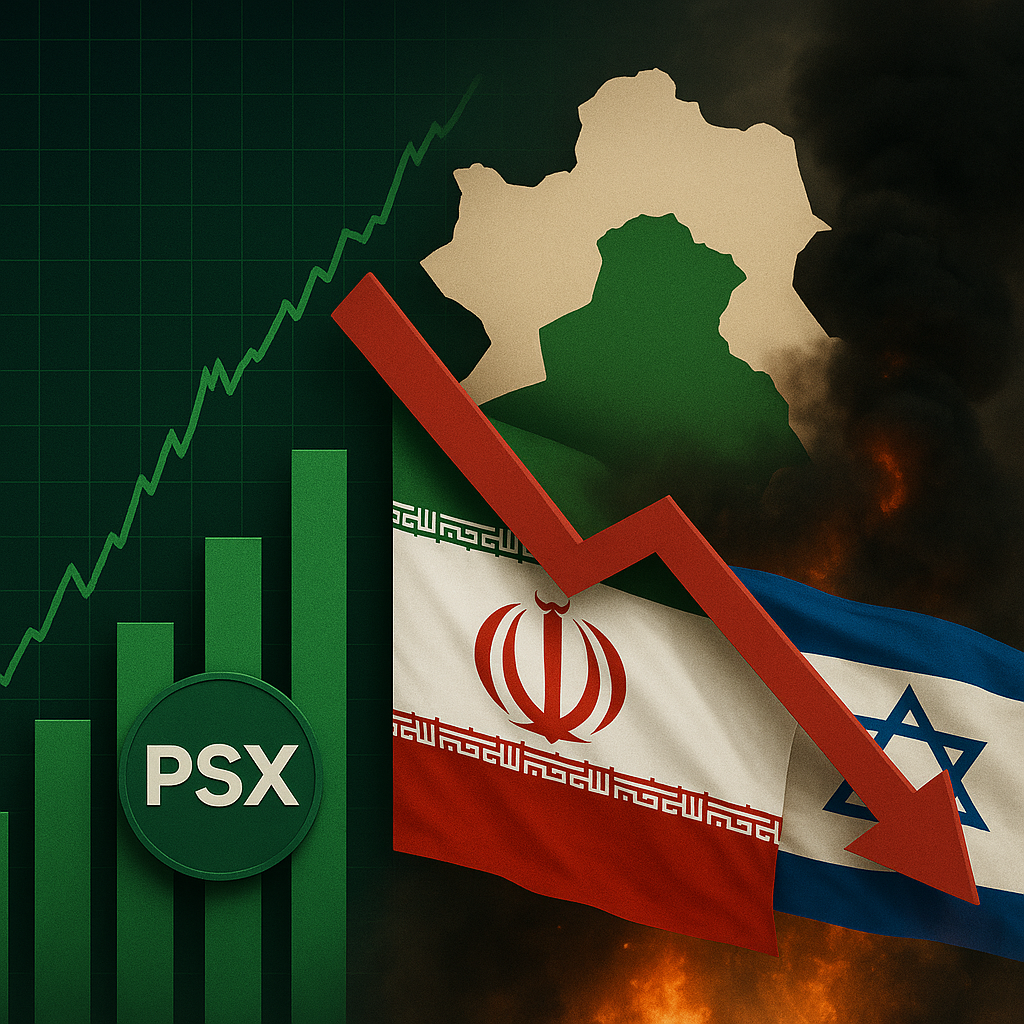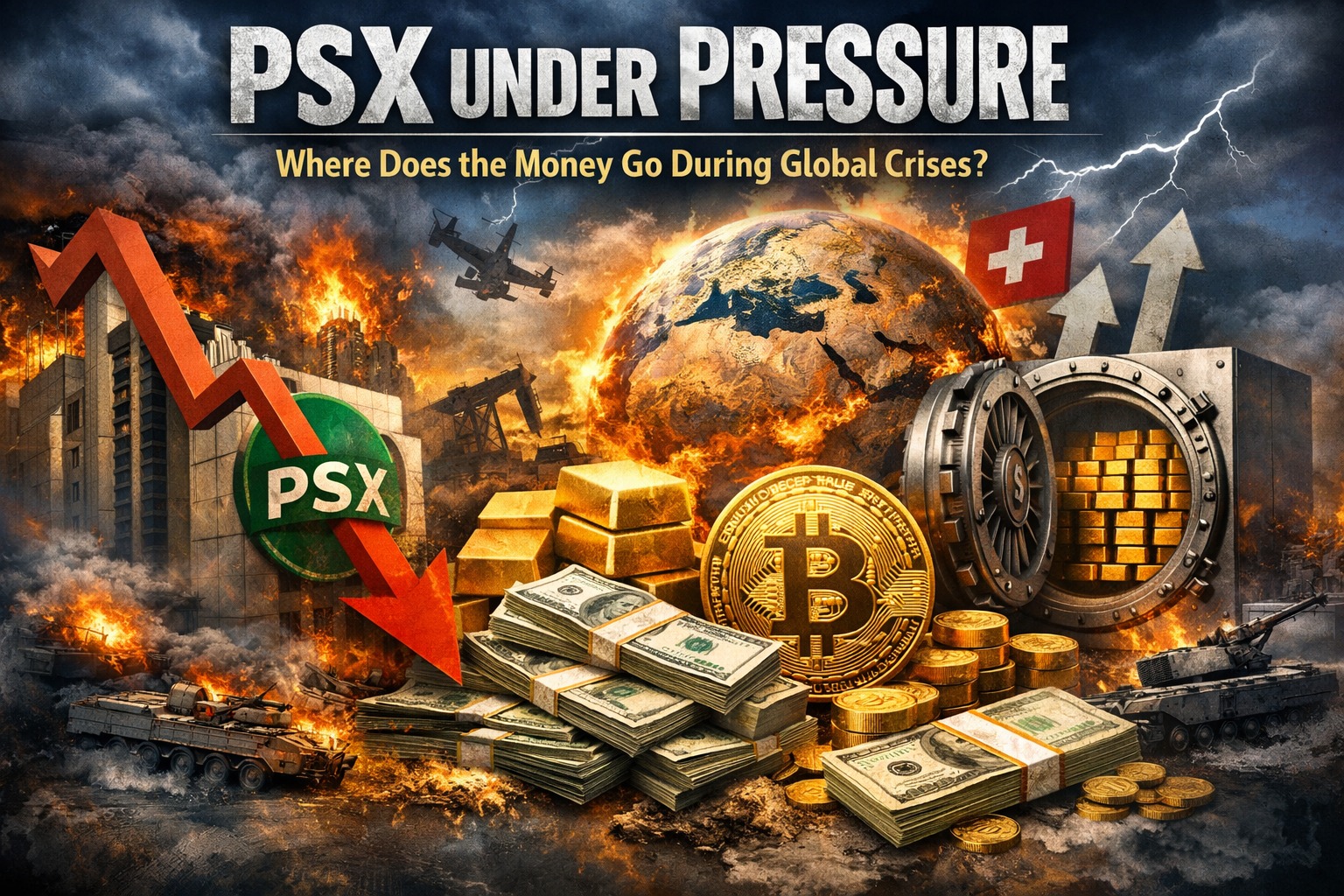
Geopolitical tensions whether in the Middle East, Eastern Europe, or Asia trigger immediate reactions across global financial markets. However, the impact is not uniform. Capital does not disappear; it reallocates based on risk perception. The clearest divergence appears between equity markets and debt markets, and the contrast becomes even sharper when comparing countries like Pakistan and the United States.
How Markets React to Geopolitical Shocks
When uncertainty rises, investors prioritize capital preservation over returns. This leads to a classic pattern:
1. Equity Markets Decline
Stock markets, including the Pakistan Stock Exchange, typically fall during geopolitical crises.
Key drivers:
- Risk aversion: Investors exit equities due to uncertainty
- Earnings pressure: Rising oil prices and inflation compress corporate margins
- Foreign outflows: Emerging markets face capital flight
- Currency depreciation: Weak currencies increase business costs
The result is sharp, sentiment-driven sell-offs, often exceeding what fundamentals justify in the short term.
2. Debt Markets Strengthen (Globally)
In contrast, debt instruments, especially government bonds become attractive.
Why?
- They offer predictable returns
- They are perceived as low-risk assets
- They provide a safe haven during volatility
This leads to increased demand for government securities, particularly those issued by entities like the U.S Treasury or state Bank of Pakistan.
Pakistan vs USA: A Structural Difference
While the global pattern is clear, its intensity and outcome differ significantly between Pakistan and the United States.
Pakistan: Equity-Dominated, High Volatility
Pakistan’s financial ecosystem is retail-driven, with a strong preference for equities.
- Most individual investors participate in stocks rather than bonds
- Government securities are largely held by banks and institutions
- Retail access and awareness of bonds remain limited
During geopolitical stress:
- Investors panic and exit equities
- Limited shift into bonds by individuals
- Capital often moves to cash, USD, or exits the system
Result:
The Pakistan Stock Exchange experiences sharp declines and higher volatility, as selling pressure is not absorbed internally.
USA: Bond-Centric, Capital Rotation System
The US market operates very differently. It is institutionally driven, with a deep and liquid bond market.
- Pension funds, insurers, and global investors hold large volumes of government bonds
- The bond market is easily accessible and globally trusted
During geopolitical stress:
- Investors reduce exposure to equities
- Capital shifts into US Treasuries
- The system retains liquidity through internal reallocation
Result:
Markets remain relatively stable, as funds move from stocks to bonds rather than exiting entirely.
The Core Insight
In emerging markets like Pakistan, money exits during crises. In developed markets like the US, money rotates.
This distinction explains why:
- PSX corrections are often steeper and more volatile
- US markets show faster stabilization and recovery
Conclusion
Geopolitical crises do not destroy wealth they redistribute it across asset classes. Understanding this flow is critical for investors.
For Pakistan, the challenge lies in developing deeper debt markets and investor awareness, which can stabilize the system. For investors, the lesson is clear: reacting emotionally leads to losses, while understanding capital movement creates opportunity.
.png "How Interest Rates Affect PSX: Best Investment Strategy for Pakistani Investors in 2026")