

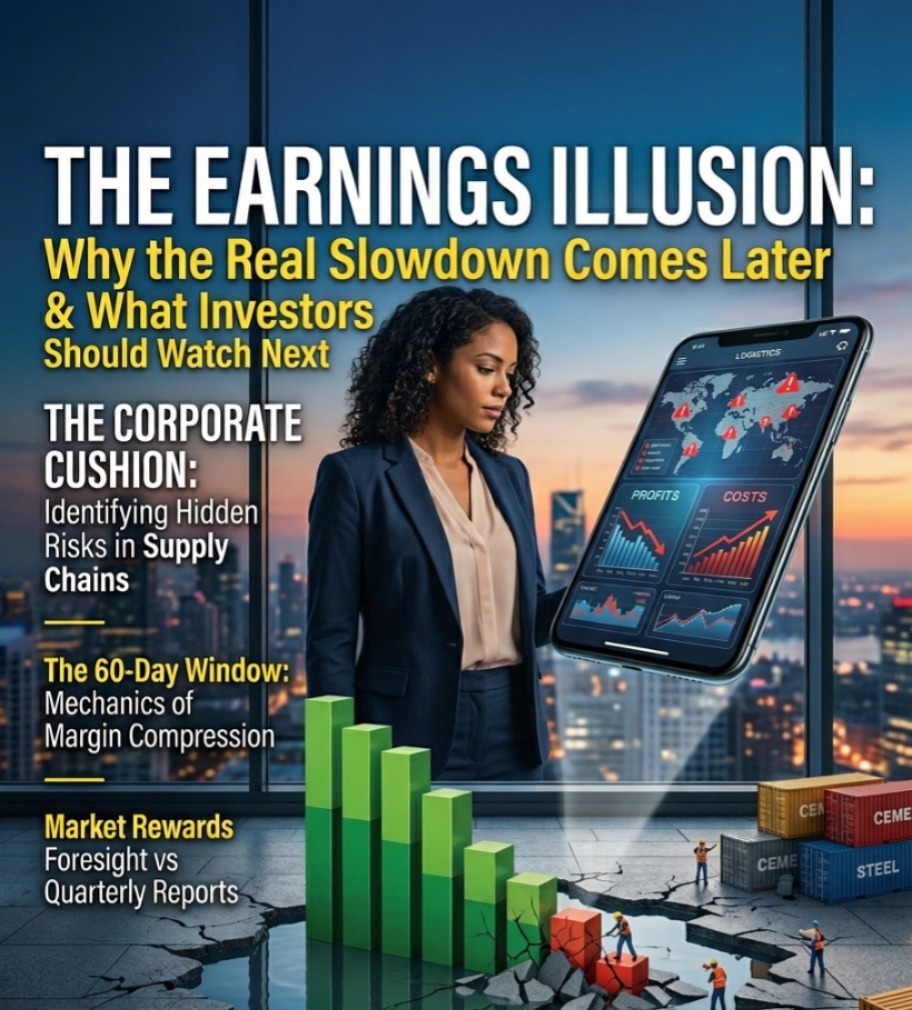
Sometimes, it looks like companies are doing fine even when the world around them is facing big problems. The news might talk about crises, wars, or rising prices, but many company reports still show steady profits. This can be confusing. Does it mean businesses are strong? Not really. This is called the “Earnings Illusion” profits seem okay now, but trouble could be coming later.
The Corporate Cushion
Many big companies prepare for tough times in advance. They keep extra supplies, materials, and orders ready to avoid stopping work. Think of it like a backup plan: if something goes wrong, they can still run smoothly for a while.
This makes their profits look healthy for a short time. But this “cushion” doesn’t last forever. Once it runs out, the real effects of problems like supply delays, higher costs, and currency changes start showing up in their earnings.
The Mechanics of Margin Compression: The 60-Day Window
Usually, it takes about 60 days for these hidden problems to affect profits. Here’s what happens:
- Supplies Run Out: Companies use up their backup stocks.
- Production Delays: Shipments and deliveries are late, slowing down business.
- Higher Costs: Companies have to buy materials at higher prices in a disrupted market.
- Currency Changes: If companies rely on imports, changes in currency can make materials even more expensive.
All these factors squeeze profit margins. And if customers aren’t buying more, companies can’t easily raise their prices to cover these costs.
Which Companies Are Most at Risk
Not all companies are affected the same way.
- High-Risk Companies: Industries like textiles, cement, cars, and steel need a constant flow of raw materials. A break in supply quickly hurts profits.
- Low-Risk Companies: Banks, fertilizer makers, and utilities don’t rely on physical goods as much. They are usually safer when supply chains are disrupted.
Why the Market Rewards Foresight
Waiting for quarterly reports is risky. By the time profits drop on paper, the stock prices might have already fallen. Smart investors watch early signs: shipment data, inventory levels, and currency changes. This helps them make decisions before the “official” bad news comes out.
What investors should watch
A company’s report shows the past, not the future. Profits may look fine now because of backup plans, but real challenges often appear later. Investors need to think ahead: is your portfolio ready for problems that might hit in the next 60 days, or are you trusting an illusion of stability?
.png "The Role of Monetary Policy, How SBP effects the General Public and Our Economy")

.png "How Interest Rates Affect PSX: Best Investment Strategy for Pakistani Investors in 2026")